How to Start Downsizing a Parent's House Before a Crisis
You can't empty forty years of house in a weekend, and you shouldn't try. What you can do is start: in the right room, with the right boxes, and with a plan that does the arguing for you.
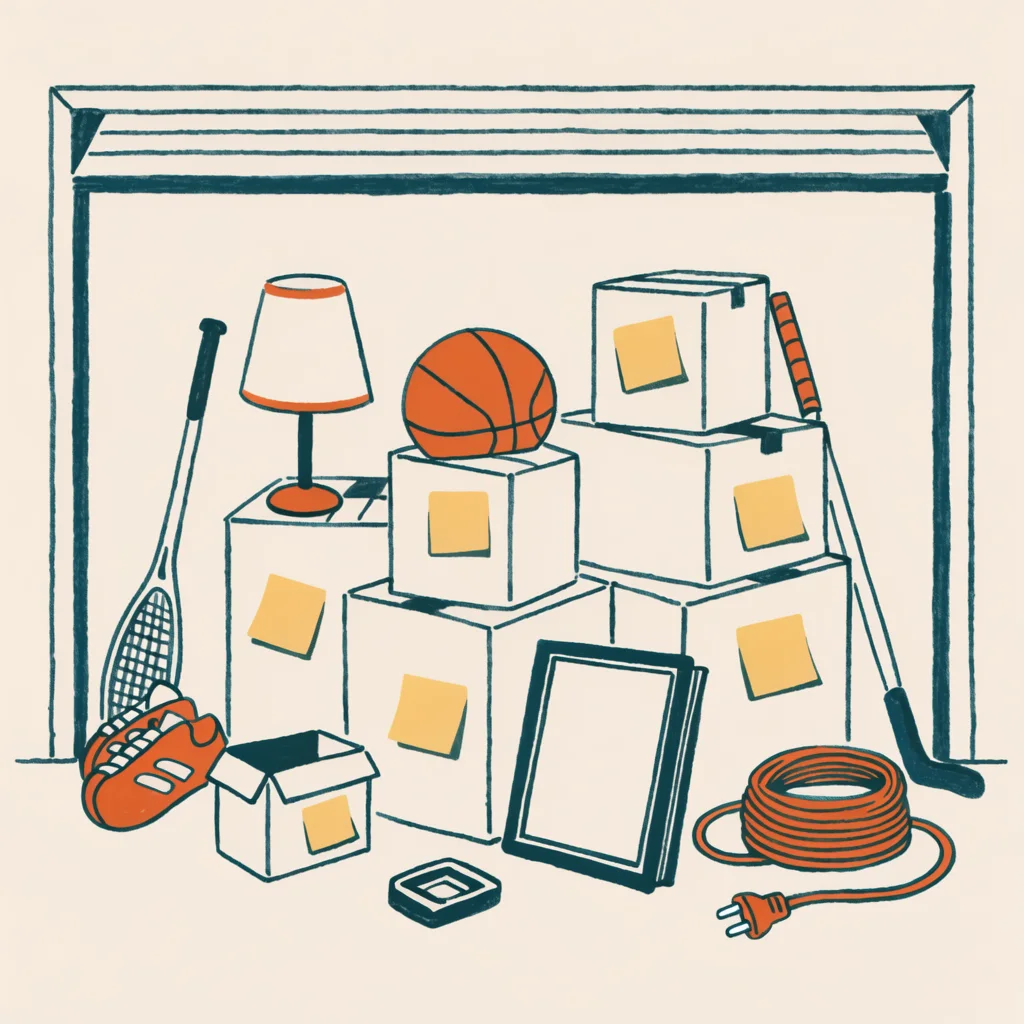
before there is a crisis
The first win is one low-stakes box, not the whole garage.
Stuff holds history. Start where the feelings are smaller, use clear destinations, and stop before the session turns into a fight.
start in the wrong room, on purpose
The five-box starting map
Pick a room nobody loves, sort into five labeled boxes, protect the sentimental items first, and quit while the momentum is positive; repeat monthly, not weekly.
- Rule 1Start in the wrong room, on purposeNever start in the attic, the garage, or Mom's bedroom: start in the guest room, laundry room, hall closet, or kitchen cabinets, where one low-stakes win beats three heroic arguments.
- Rule 2Five boxes, not two"Keep or toss" fails because almost nothing is a pure toss: sentimental keepsakes (protected first, decided later), keep, give to a named family member, sell, and donate or toss.
- Rule 3Protect the sentimental firstPhotos, letters, grandpa's watch go to the keepsakes box before any other decision, and are decided in a separate pass per the keepsakes map, never during the sort.
- Rule 4Quit while the momentum is positiveStop at the first win, schedule the next session for a month out, and use the sibling task split so one person is not carrying the whole project.
The short version: pick a room nobody loves, sort into five labeled boxes, protect the sentimental items first, and quit while the momentum is positive. Repeat monthly, not weekly.
Rule 1: Start in the wrong room (on purpose)
Never start in the attic, the garage, or Mom's bedroom. Start in a room with low emotional stakes: the guest room, the laundry room, the hall closet, the kitchen cabinets. The point of the first session is not volume: it's proving to everyone (including your parent) that the process is survivable. One low-stakes win beats three heroic arguments.
Rule 2: Five boxes, not two
"Keep or toss" fails because almost nothing is a pure toss. Use five labeled boxes, in this order of importance:
- Sentimental / family keepsakes: photos, letters, grandpa's watch. Protected first, decided later (see Rule 3).
- Keep: actively used, or clearly needed.
- Give to family: a specific person's name on the box, written down, not "someday."
- Donate / sell: things with real resale or reuse value.
- Trash / recycle: honestly, most of it.
One person sorts, one person carries, and the parent makes the decisions but doesn't do the lifting: that split keeps everyone in their strength.
Rule 3: Protect the sentimental items first, decide them last
The fastest way to destroy a downsizing project is to force decisions about the china, the photos, and the wedding dress on day one. Pull those items out, put them in the sentimental box, and close it. Decide them in a separate, calmer session with the people who might actually want them: see the sibling guide for the pre-meeting that prevents "you took Mom's ring" fights.
Rule 4: Every item leaves with a destination
Nothing gets moved "to think about." If it leaves the house, it goes to a named person, a named organization, or the curb. This single rule prevents the classic failure mode: stuff migrating from Mom's house to your garage.
Rule 5: The 20-minute session
Set a timer for 20 minutes per session. When it dings, stop: even mid-shelf. Short, frequent, positive sessions (every other week is fine) beat one heroic weekend that exhausts everyone and produces a garage full of "we'll deal with it later."
The order of the house
When you're ready to go room by room, this order minimizes pain:
- Hall closets and cabinets (low stakes, quick wins)
- Kitchen (duplicates: six spatulas, three of everything)
- Guest room / storage rooms
- Living areas (furniture decisions, with the family pre-meeting first)
- Garage and attic (the big reveal, by now the system is proven)
- Parents' bedroom (last, most emotional, no audience)
The services question
Estate sales, donation pickups, junk removal, and senior move managers all have real roles, but don't hire any of them until you know what's actually in the house. The first 20-minute session answers whether you need a $2,000 cleanout or a $200 dumpster run. A senior move manager is worth real money when a move is time-boxed and the family is spread out; see our Downsizing section for what's coming on that.
Related
- How siblings can divide the work, including the sentimental-items pre-meeting
- Documents to find first: before anything leaves the house, locate the paperwork
- Downsizing & Stuff: the 30/60/90-day calendar is coming as a tool
Sources
- This is a general decluttering/downsizing method (F0, reviewed annually); the five-box system and room ordering follow standard professional-organizer practice. No individualized move or estate advice is implied.
Found an error? Report it.