keep the house safe, not institutional
Their House
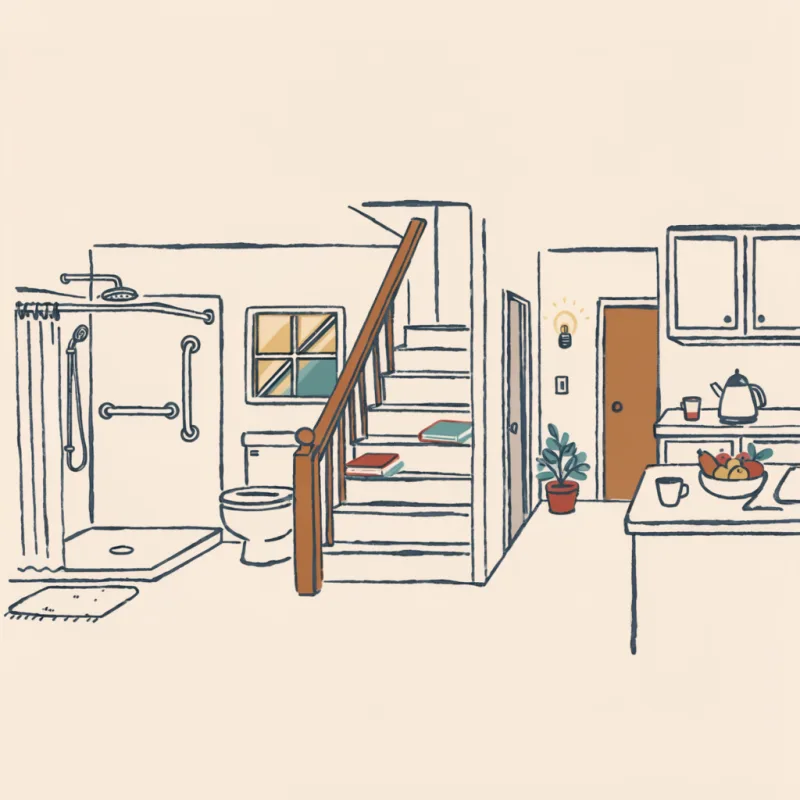
"Dad is determined to stay in that house." Fine: then the job is making the house match reality, starting with the two places where falls actually happen: the bathroom and the stairs. Most of the high-impact fixes are cheap, and none of them have to look institutional.
Start here
These guides are ordered step by step. Start where you are, and continue when the situation moves.
Home safety
- Bathroom Safety Changes That Don't Make the House Feel Institutional
- Kitchen Safety for Aging Parents: The Fires, Falls, and Food Risks Worth Fixing
- Fire and carbon-monoxide safety for a parent's home
- + 9 more steps, in order
Start at step one, and continue when the situation moves.
Start here
Technology that helps parents age in place
Video doorbells, smart speakers, and motion lighting can help a parent stay home safely. The honest picks, the privacy checks, and what to skip.
Aging-in-place tech guideWho maintains the house now
Maintenance is a plan with an owner for each job, not a to-do list. The yearly checklist that protects both the house and the parent's ability to stay in it.
Home maintenance guideWinter home safety
Cold weather turns ordinary home risks into emergencies: falls on ice and heating hazards. The seasonal pass that prevents them.
Winter safety guideThe parent's emergency plan
When the parent cannot speak for themselves, the family needs the one-page plan: contacts, medications, conditions, and who decides.
Emergency plan guideHome safety upgrades on a budget
The highest-impact safety fixes are not the expensive ones. The order that spends the family's money where the risk is, and the free checks first.
Budget safety guideBedroom safety: the room where falls happen at night
Dark paths, bed height, and the 2 a.m. walk to the bathroom: the bedroom fixes in order, and the phone that should be within reach.
Bedroom guideBathroom safety changes that don't make the house feel institutional
The bathroom is where the stakes are highest and the aesthetics matter most. Grab bars, non-slip flooring, better lighting, and a toilet-height conversation.
Bathroom guideStairs and handrails: the highest-risk spot in the house
Stairs cause the most serious home falls. The two-sided handrail rule, the contrast edges that help aging eyes, and when a stair lift is the honest answer.
Stair-safety guideStrength and balance: the exercise that prevents the next fall
Falls are not a normal part of aging, and strength and balance training is the best prevention. The four exercise types, how to start safely, and when to get a doctor's clearance.
Exercise guideMedicines that raise fall risk: the pharmacist check
Blood pressure, sleep, mood, and pain medicines can cause the dizziness behind a fall. The classes to review, the timing fixes, and the standing test.
Medicine-fall guideFall-proofing the rest of the house: stairs, lighting, and emergency access
The whole-home checklist beyond the bathroom: in the order that actually prevents falls.
Fall-prevention guideEmergency kit & plan: what to prepare now
The grab-and-go kit, the one-page information sheet, and the who-calls-whom plan: built with your parent, not for them.
Emergency guideKitchen safety: fires, falls, and food risks
The kitchen is where fires, falls, and medication mistakes happen most. Here's the practical order of fixes: reachable items, stove safety, and the extinguisher question.
Kitchen guideFire and carbon-monoxide safety
Alarms that work, a CO detector that beeps, and an escape plan a parent can actually do: the three-part setup that changes the odds.
Fire-safety guideMotion & night lighting: worth it or not?
Lighting is the cheapest safety upgrade in the house. Here's what actually helps a 2 a.m. trip to the bathroom.
Decision guideThe house checklist, in order
Start with the live Home Readiness Check if you are walking the house today. If you just need the ordering, use this sequence: it follows the evidence on where falls and emergencies happen, not what's cheapest to photograph.
- Bathroom: grab bars at the toilet and shower, non-slip flooring, night path lighting, and a shower chair if balance is shaky. See the bathroom guide.
- Stairs: both handrails secured, contrasting edge strips, adequate light at top and bottom, nothing stored on steps. If they're already unsteady, a professional (occupational therapist or contractor) should assess before you spend on bigger fixes.
- Lighting: brighten dark hallways and the path from bed to bathroom. See the night-lighting guide.
- Emergency access: can someone get in if they can't get to the door? A lockbox or a trusted neighbor with a key, and a phone that's easy to reach from the floor.
- Kitchen: frequently used items within easy reach, a working fire extinguisher, and a clear path to the stove.
What this is not: this is not a medical, occupational-therapy, or building-code assessment, and nothing here produces a "safe to live alone" verdict. If balance, memory, or mobility are already raising questions, involve a professional: see Care & Safety for how to start that conversation.
The Home Readiness Check
The Home Readiness / Can They Stay Here? tool is live: a structured walkthrough of entrances, stairs, bathroom, lighting, bedroom, kitchen, emergency access, and communication, with "fix now / plan / optional" output and no false precision. Run the Home Readiness Check: it runs entirely in your browser, and nothing you enter is stored or sent anywhere.