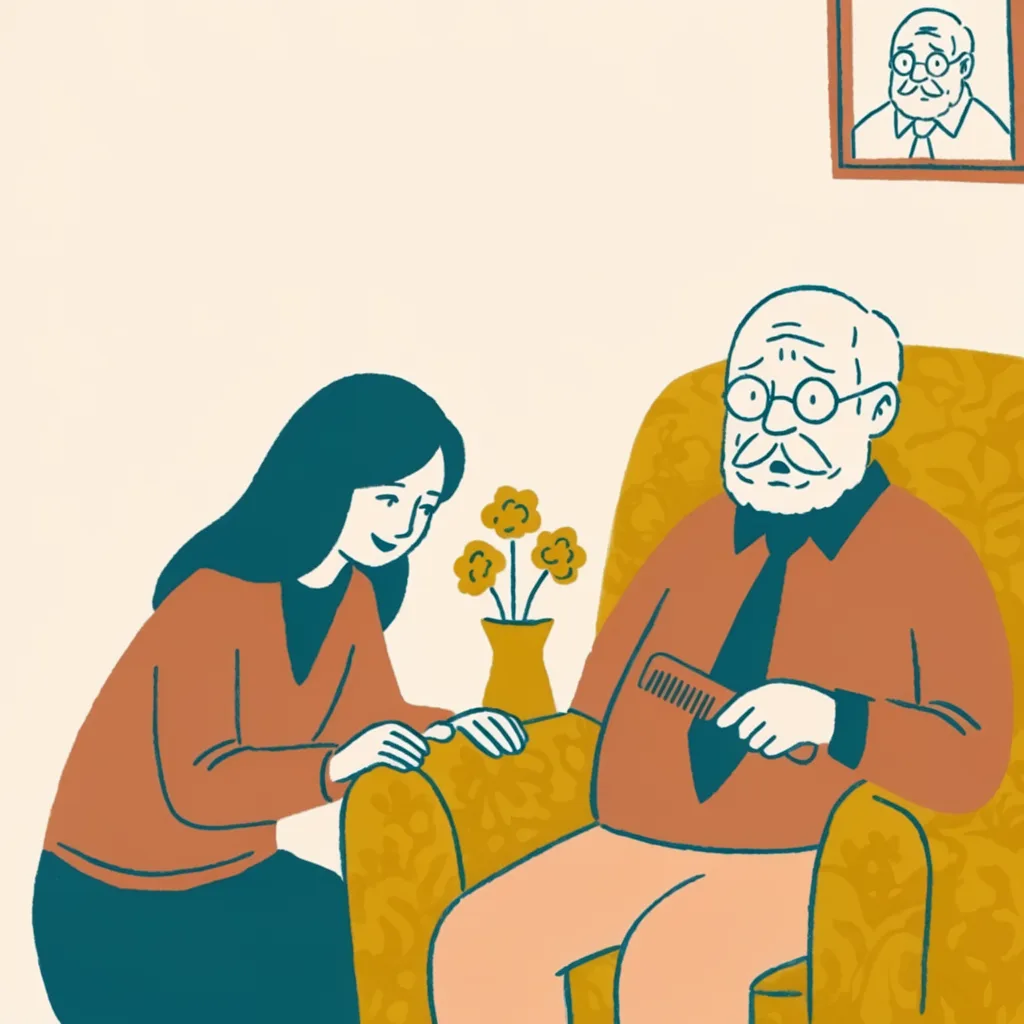
How to Talk to a Parent About Memory Loss (Without Panicking or Diagnosing)
You've noticed things: repeated questions, a missed bill, a story told twice in one hour. Your brain jumps to the worst case, and then you do the one thing that guarantees a fight: you start watching them like a detective and correcting them like a teacher. There's a better path, and it starts with noticing without diagnosing.
witness, then talk, then act
The memory-loss conversation map
The goal is not to deliver a diagnosis. It is to move from noticing to talking to acting, with the parent as a partner instead of a target.
- NoticeWatch like a witness, not a detectivePatterns, not incidents: repeated questions, missed bills, new trouble with familiar tasks.
- OpenStart with concern, not conclusions"I noticed you seemed unsure about the bill" beats "you have memory problems." Small doses, no audience.
- PartnerMake it a shared projectTrack the patterns together and agree on what would make a check-up worth it.
- VisitThe clinician carries the assessmentA professional visit separates normal aging from something more, and the assessment guide explains what to expect.
The short version: you are not qualified to diagnose memory loss, and your parent is not ready to hear a diagnosis from you, so don't do either. Instead: (1) keep a simple list of specific, dated examples of what you're noticing; (2) send that list to their doctor before the next visit and ask the office to do a screening; (3) open conversations around what you can help with, not what's wrong with them. Memory changes are common with age and not always dementia, but some causes are reversible (medication, thyroid, depression, infections), which is exactly why a doctor visit matters more than any conversation you could have.
First: what memory loss is and isn't
The National Institute on Aging explains that some forgetfulness is a normal part of aging: misplacing keys, forgetting a word, missing an appointment occasionally. The patterns that deserve a doctor's attention are different: forgetting recently learned information repeatedly, losing track of dates or seasons, struggling with familiar tasks (paying bills, following a recipe), and trouble following or joining conversations.
And here's the part that should shape everything you do next: some causes of memory problems are reversible: medication side effects, vitamin deficiencies, thyroid problems, sleep issues, depression, and infections can all look like "dementia" from the family's side of the table. That's not a reason to relax; it's a reason to get to a doctor rather than to a verdict. Treating the right cause early can change the whole trajectory.
If you notice a sudden change: confusion that comes on over days or hours, especially with a fever, a recent fall, or a new medication: that's a medical urgency, not a "memory conversation." Contact their clinician promptly; sudden confusion needs evaluation quickly.
Notice like a witness, not a detective
When you're worried, the instinct is to start "checking" a parent: asking questions you already know the answer to, correcting them mid-sentence, tallying every miss. Stop. Testing a parent is humiliating, it poisons trust, and it doesn't tell you anything a professional visit won't tell you better.
Instead, keep a quiet observation list: the same "behaviors, not verdicts" method from our professional assessment guide:
- Specific, dated examples: "March 3: asked what day the appointment was, three times in 20 minutes." Not "she's forgetting everything."
- Changes in daily function: missed bills, unpaid utilities, confusion with medication, burnt pots, unopened mail piling up.
- New trouble with familiar things: getting lost on a familiar route, struggling with the remote or phone they've used for years (our scams & tech section covers device simplification separately).
- Mood or personality shifts: withdrawal, irritability, suspicion, unusual apathy.
- Medication changes: any new drug, dose change, or combination started before the changes appeared.
This list isn't for confronting your parent: it's for their doctor. One page, sent ahead of the visit, turns a vague "she seems off" into something a clinician can actually act on.
How to open the conversation
The single biggest mistake is opening with the subject: "We need to talk about your memory." That sentence lands as an accusation, and the conversation is over before it starts. Open instead with help, using the same autonomy-first method as when a parent refuses help:
- "I noticed a couple of bills got missed: want me to help set up auto-pay?" It's about the bills, not about them. You're on their side of the table, and the fix is real regardless of what's causing the misses.
- "I'd love to come with you to your next checkup and just listen. Can I do that?" The checkup framing is neutral, and it gets a professional into the conversation without you ever having to "raise" memory directly.
- "Your doctor asked me to jot down anything I notice between visits. Can I share a few things with them?" The doctor becomes the requester, which is exactly how the driving conversation works too.
- "What would make managing things easier for you?" Starts with their goal, never with their deficit.
If the doctor's visit confirms a concern, keep the same pattern: the clinician carries the diagnosis; your job is support, logistics, and love. That division of labor protects the relationship, and the relationship is what keeps them accepting help at all.
What not to do (the four traps)
- Don't diagnose, even silently. "She has dementia" in your head becomes "she's demented" in your tone. Hold the uncertainty; the NIA's guide to dementia types is worth reading so you know what the doctor is evaluating, not so you can evaluate it yourself.
- Don't correct in front of others. If a parent misremembers at dinner, let it pass. Public correction humiliates, and humiliation is the fastest route to them hiding problems from you: the exact opposite of what you need.
- Don't ambush with a family meeting. One trusted person, one calm conversation, no audience. The sibling dynamics guide covers how to keep siblings aligned without turning care into a committee.
- Don't wait for a crisis to involve professionals. The earlier the evaluation, the more options exist, including reversible causes. The "wait and see" instinct costs more time than it buys.
Safety moves that don't require a diagnosis
You don't need anyone to confirm anything before you quietly reduce risk. Three of these are already covered elsewhere on the site; each is worth doing regardless of what's causing the changes:
- Medications: a single-pharmacy system and one-page list catch the missed-dose and double-dose errors that memory changes make more likely: see medication management.
- Scams: a sudden wave of scam vulnerability is often one of the first observable changes families notice. The family safe word and verify-independently rule protect them without any diagnosis needed.
- Falls: the fall-prevention order (stairs, lighting, trip hazards, emergency access) protects them from the risk that memory changes amplify.
- Finances: the documents checklist and money conversation guide get bills and accounts organized while the parent is still fully in charge of them.
When it's time for the professional visit
Ask the primary care office for a cognitive screening at the next visit: most practices do this routinely now. Send your observation list ahead of time so the clinician can ask the right questions. If the primary care clinician recommends a specialist (neurologist or geriatrician) or a fuller assessment, follow their lead; our professional assessment guide walks through how to raise and coordinate it without steamrolling.
And when the results come back, whatever they are, the NIA's Alzheimer's caregiving guidance is the right next read: it covers what changes to expect and how to support a parent day to day. You don't have to become an expert overnight; you have to become a good partner in the process.
Related guides
- When to get a professional assessment: how to build the observation list and raise it respectfully
- How to talk to a parent about driving: the same neutral-authority method for the other hard conversation
- Questions to ask parents before a crisis: preferences, not prognoses
- Home care options, explained: what comes next when staying alone stops working
Sources & verification
This page is checked against the standards in our editorial policy, preferring government sources for care and safety guidance. Reviewed August 2026:
- National Institute on Aging: Memory Loss and Forgetfulness (retrieved August 2026)
- National Institute on Aging: What Is Dementia? (retrieved August 2026)
- National Institute on Aging: Alzheimer's Caregiving (retrieved August 2026)
- US Administration for Community Living: Eldercare Locator (retrieved August 2026)
Found an error? Report it: we log and correct material mistakes publicly.