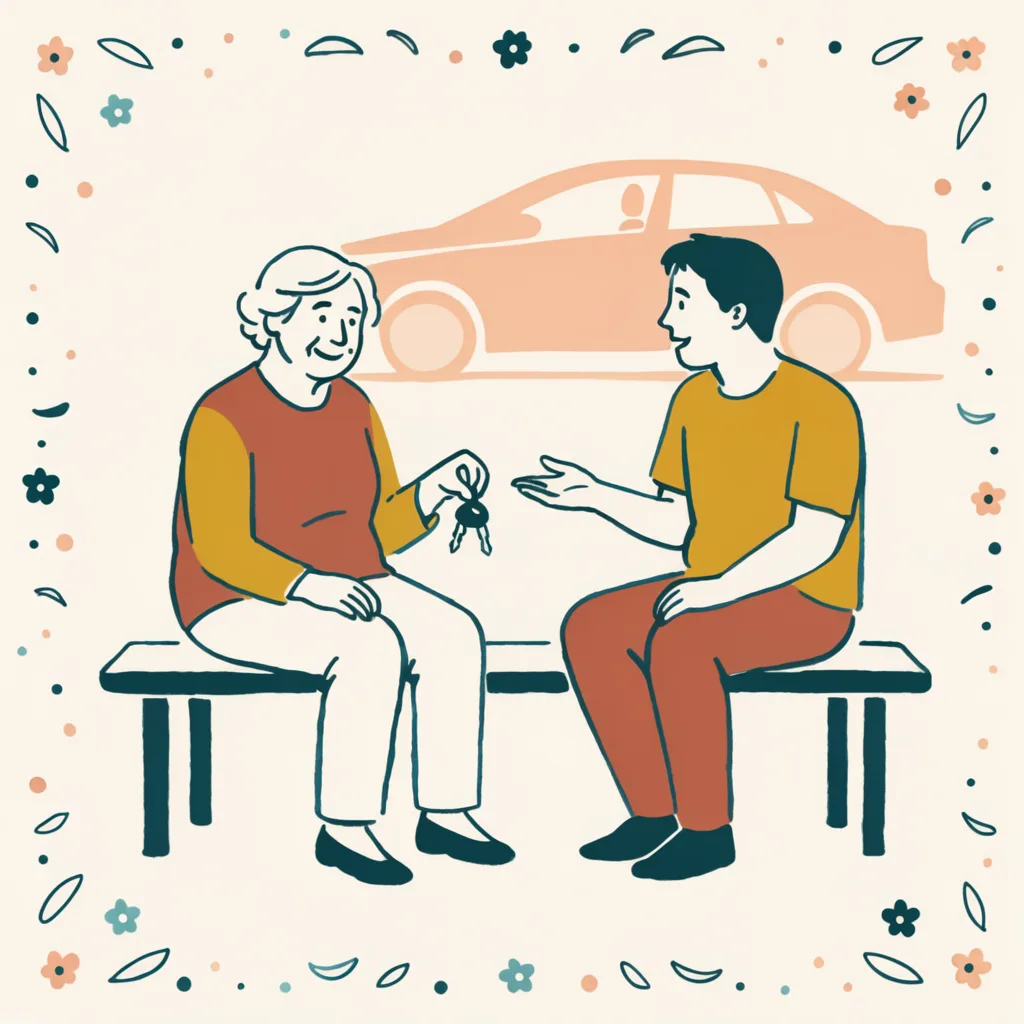
Giving Up the Keys: The Gradual Path
Stopping driving is rarely one conversation; it is a gradual path that most families walk over months. This page is that path: the early adjustments, the assessment that provides neutral evidence, the difficult conversation, and the alternatives that make giving up the keys workable instead of humiliating.
a process, not an event
The keys path map
The goal is not to win the argument: it is to get the parent to a safer driving plan they can accept, one step at a time, with the family as allies rather than adversaries.
- The gradual pathLimit first, then stopNight and highway driving go first, then local trips, then the keys with a plan in place: see the night-driving and conversation guides for the early stages.
- The evidenceA neutral assessment carries itA clinician or certified driving rehabilitation specialist evaluates vision, reaction time, and on-road skills: parents hear it better from a professional than from a child. See the assessment guide.
- The conversationProtection, not punishmentSmall doses, no audience, love before logistics, and bring the plan not just the verdict. Use the physician and DMV as allies when the risk is serious.
- Dignity afterAlternatives that keep the lifeThe rides plan, a trade (the parent keeps something like the calendar), and a deliberate keys ceremony turn an erasure into a transition.
The rule, in one sentence: the goal is not to win an argument; it is to get the parent to a safer driving plan they can accept, one step at a time, with the family as allies rather than adversaries.
The gradual path
The National Institute on Aging's safe driving guidance frames driving cessation as a process, not an event, and most families follow the same steps: limit night and highway driving first, then local trips, then hand over the keys with a plan in place. The night-driving and conversation guides cover the early stages; this page covers the end of the path.
The assessment that provides evidence
When the family's concern is real but the parent disagrees, a professional driving assessment provides neutral evidence: a clinician or certified driving rehabilitation specialist evaluates vision, reaction time, and on-road skills. The parent who hears it from a professional is more likely to accept it than from a child, and the dementia-driving guide covers the faster timeline that applies when memory loss is present.
The conversation
- Use the same methods as the driving conversation: small doses, no audience, love before logistics.
- Frame it as protection, not punishment. "We want you safe and we want others safe, and we are building the plan together."
- Bring the plan, not just the verdict. The rides plan is the part that makes the conversation survivable: who drives, what it costs, how the parent stays independent.
- Use the physician and the DMV as allies when needed. A doctor's recommendation carries weight, and the assessment guide covers the reporting options when the parent will not stop and the risk is serious.
Alternatives that preserve dignity
- The rides plan: family, paid rides, and senior transit, written down with a backup.
- The trade: some families pair the keys with something the parent keeps, like control of the household calendar or the shopping list, so the loss is not total.
- The ceremony: a deliberate "keys are done" moment with the family present turns an erasure into a transition, and the grief guide applies to this loss too.
Related guides
Sources & verification
This page is checked against the standards in our editorial policy, preferring government sources for driving safety guidance. Reviewed August 2026:
- National Institute on Aging: Driving Safety Tips for Older Adults (retrieved August 2026)
- US Administration for Community Living: Eldercare Locator (retrieved August 2026)
Found an error? Report it: we log and correct material mistakes publicly.
Quick answers
Common questions, answered plainly. The details match the sources above.
How do we get a parent to stop driving when they refuse?
Use the gradual path: limit night and highway driving first, get a professional driving assessment for neutral evidence, bring a rides plan rather than just a verdict, and use the physician as an ally. The goal is a plan the parent can accept, not a win.
What if the parent will not stop and the risk is serious?
A physician's recommendation carries weight, and the driving assessment guide covers the reporting options to the DMV when the parent will not stop and the risk is real.
Found an error? Report it.