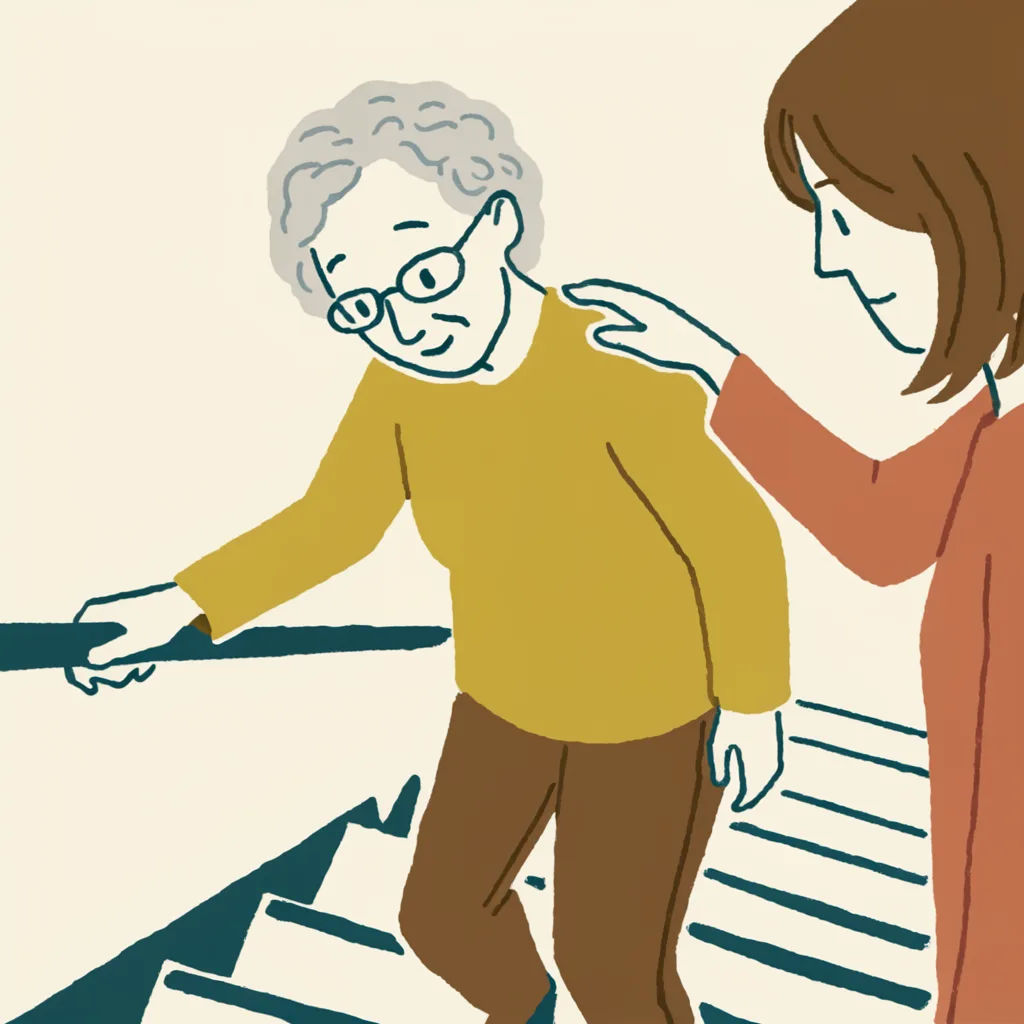
When a Parent Is Afraid of Falling
The National Institute on Aging addresses fear of falling directly in its falls guidance, because the fear itself becomes a risk: a parent who stops moving loses strength, balance, and confidence, which makes a fall more likely. This page is the family plan that rebuilds confidence safely.
fear of falling is part of the fall problem
The fear-of-falling map
Fear of falling can raise the actual risk: less movement weakens muscles and balance, a smaller world shrinks social contact, and rigid careful walking can be less stable, not more.
- How fear becomes riskLess movement, smaller world, stiffer walkingThe parent stops walking to the mailbox or the store and strength declines; fewer activities mean fewer social contacts; and a parent who walks carefully but rigidly can be less stable, not more.
- After a fallThe first steps come firstIf the fear started with a fall, follow the after-a-fall guide first: check for injury, tell the doctor, look for a medical cause, and check the medication half.
- The family planAssessment, safer home, small winsGet a professional assessment to find the balance or strength issue, make the home safer first so the fear has less to hold onto, and rebuild with repeated safe steps, not reassurance.
- Mobility aidsOnly if the therapist says soThe right walker or cane can be the difference between staying home and getting out, chosen without the parent feeling defeated: see walkers and canes.
Why it matters: the NIA's falls and falls prevention page treats fear of falling as part of the fall problem: older adults who fear falling may limit activity, and less activity means weaker muscles and worse balance, which raises the actual risk of a fall.
How fear becomes a fall risk
- Less movement. The parent stops walking to the mailbox, the store, or the senior center, and strength declines.
- A smaller world. Fewer activities mean fewer social contacts; the loneliness guide covers that spiral.
- Stiffer, slower walking. A parent who walks carefully but rigidly can be less stable, not more.
After a fall: the first steps
If the fear started with a fall, follow the after-a-fall guide first: check for injury, tell the doctor, and look for a medical cause. The NIA guidance recommends addressing the underlying problem, and the medicines and falls guide covers the medication half.
The family plan that rebuilds confidence
- Get a professional assessment. A doctor or physical therapist can find the balance or strength issue behind the fear; the strength and balance guide has the exercise options.
- Make the home safer first. Reduce the actual risk so the parent's fear has less to hold onto; the room-by-room fall prevention guide is the checklist.
- Rebuild with small wins. One short walk with the family, then two, then the mailbox alone. Confidence returns from repeated safe steps, not from reassurance.
- Add a mobility aid if the therapist says so. The right walker or cane can be the difference between staying home and getting out; the guide covers choosing one without the parent feeling defeated.
Related guides
Sources & verification
This page is checked against the standards in our editorial policy, preferring government sources. Reviewed August 2026:
- NIA: Falls and Falls Prevention (retrieved August 2026)
- NIA: Falls and Fractures in Older Adults (retrieved August 2026)
Found an error? Report it: we log and correct material mistakes publicly.
Quick answers
Common questions, answered plainly. The details match the sources above.
Is fear of falling itself dangerous?
It can be. The National Institute on Aging notes that older adults who fear falling may limit activity, and less activity weakens muscles and balance, which can increase the real risk of a fall.
How do we rebuild a parent's confidence after a fall?
Start with a medical check, make the home safer, then rebuild with small wins: short walks with the family, then longer ones. A physical therapist can guide the strength work, and a walker or cane can help when prescribed.
Found an error? Report it.